Why I Changed My Mind About Holiday Giving

Five years ago we partnered with our church in something called Mission Christmas.  A group of us decided to adopt a family and buy them everything they needed for Christmas.  A Christmas tree with decorations, food, gifts for the entire family, and lots more.  We were all so excited to gather the goodies and deliver them one Saturday afternoon as a “surprise blessing”.

HolidayGift2

I imagined we would drive up, the children and their parents would come running out, eager to receive the material blessings, and they would ask us why we were there and we could tell them about Jesus and we’d all live happily ever after!

Talk about idealism.

Here’s how it really went down:

A car full of white people drove up to their house.  When we got there, a group of men were out front in lawn chairs hanging out, drinking a case of Budweiser.  We got out to greet them and ask for the father by name.  A man quickly left to go into the backyard and everyone else acted as if they had no idea who the man was.  We then went inside to greet the mother.  Again, eager for the hugging and appreciation, we told her who we were and why we were there.  She stood quiet, in her kitchen, almost with her head hung low as we brought in bags of groceries and a giant Christmas tree.  The children came running out of their room so excited to see us, and then stood there and watched with their mother as we brought in bag after bag, gift after gift, in awkward silence.  We tried to make small talk and get to know them, but between my broken Spanish and their broken English, it was just well, awful.

We drove away, and I looked I at my husband and said, “that felt weird.  Why was that so weird?  Why did the dad run away from us?”

To which my husband said “we just humiliated him in front of his friends and entire family.”

My heart split in two.  Because he was right.

I had no idea how disrespectful and humiliating something like this must be for a father.  And we not only did it to him, but right in front of friends and his own children.

In that moment, I changed my mind about the whole “adopt a family” Christmas giving thing.  I realized that is a very awful way to actually love someone in Christ for several reasons.

#1  It’s prideful.  “Here we are!  Rich white people are here to save you and give you everything and you can call us your heroes!”

#2  It’s disrespectful.  We had not thought about how these parents might feel about “receiving” this unexpected blessing.  Or how it made them feel to know they were less fortunate than us and if we bring them stuff, they’ll feel better.

#3  It’s materialistic.  It’s assuming that the “poor” are the people who can’t afford stuff.  And our western way says the way to help the poor is by giving them stuff.

#4  It’s unhelpful.  Things like this really just make us feel better about ourselves.  We post pictures of the “poor” family we blessed that Christmas and share it with everyone to boost our ego.  When in reality, if we were standing next to them inline at the grocery store, we’d have no idea who they were.

So this experienced changed everything for me.  It made me realize that while the giving may seem good, we may even have good intentions, it’s a little bit of a blind spot in our culture’s eyes as to what is really helpful and encouraging.

It’s also changed the idea of “Mission Christmas” for my church as well.  Why not empower the parents themselves to buy gifts and be the heroes rather than the rich white people from a different neighborhood?

SO some things to think about this holiday season as a way to be a blessing . . .

Is your giving/outreach helpful or hurtful? 

Does it foster relational health between others or tension?

Is your giving really about blessing someone else or making you feel better?

Is there a different way besides materialism that you can bless someone?

Is there a way to give that promotes dignity rather than shame?

Do you have a relationship with the person you are giving to?  What if the better way to bless is not with presents, but with presence?

These are things I will be asking of myself as I give this holiday season.  And LORD forgive me of my pride, my distorted thinking, of what a “blessing” truly is.  Knowing that in this Christmas season, you LORD Jesus are the greatest Gift of all.

“Beware of practicing your righteousness before other people in order to be seen by them, for then you will have no reward from your Father who is in heaven. “Thus, when you give to the needy, sound no trumpet before you, as the hypocrites do in the synagogues and in the streets, that they may be praised by others. Truly, I say to you, they have received their reward.  But when you give to the needy, do not let your left hand know what your right hand is doing, so that your giving may be in secret. And your Father who sees in secret will reward you.”  (Matthew 6:1-4)

 For the Son of Man came to seek and to save the lost.”  (Luke 19:10)

*For more resources on how giving can be helpful, rather than hurtful, check out these books and articles:

 When Helping Hurts” by Steve Corbett and Brian Fikkert

Compassion, Justice, and the Christian Life” by Robert D. Lupton

Kim Feil’s book review on “Toxic Charity” by Robert D. Lupton
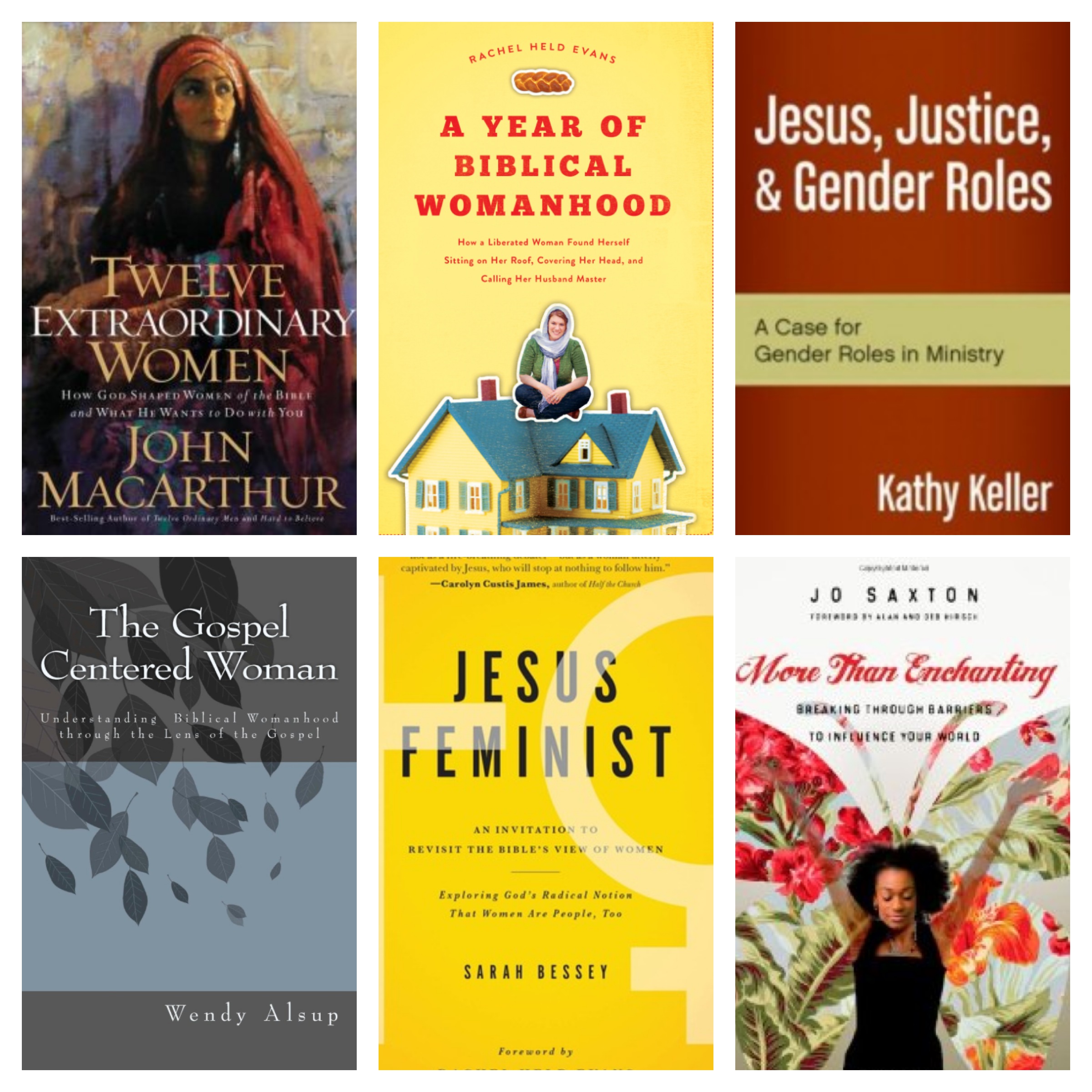
Complementarian Feminist?

Gosh dang it.  There’s that verse again.  It keeps haunting me!  I tried to ignore it, but it came up again last week in bible study and I felt like a deer in the headlights.

Because what does a barren, complementarian woman, gifted to teach and lead do with 1 Timothy 2:8-15?

I desire then that in every place the men should pray, lifting holy hands without anger or quarreling; likewise also that women should adorn themselves in respectable apparel, with modesty and self-control, not with braided hair and gold or pearls or costly attire, 10 but with what is proper for women who profess godliness—with good works. 11 Let a woman learn quietly with all submissiveness. 12 I do not permit a woman to teach or to exercise authority over a man; rather, she is to remain quiet. 13 For Adam was formed first, then Eve; 14 and Adam was not deceived, but the woman was deceived and became a transgressor. 15 Yet she will be saved through childbearing—if they continue in faith and love and holiness, with self-control.

Not because I was bored one day, but because I wanted to know what the bible really says about “women in ministry”, I set out to do some learning.  And I wish I could go back to a simpler time.

I’m one of those thinkers, black & white thinkers, who needs to know what’s “right” and live accordingly.  So I terrorize myself into studies like this that are, well, gray.

I bought a bunch of books on the topic.

photo-160

I read a lot of blogs.

I asked a lot of questions.

I cried.

I prayed.

I studied.

I talked.

I processed.

And I napped.

And you know what? I landed right back where I started.  That’s right.  I am still asking what the heck does 1 Timothy 2 mean?  1 Corinthians 14?  Genesis 3? Proverbs 31?  1 Peter 3?  Ephesians 5?

Because women’s discipleship has to be more than just being modest and quiet.  And what is modesty anyway?  Not wearing a low cut shirt and fancy jewelry or a position of the heart to be humble?

It has to be more than being mom.  Saved through childbearing 1 Timothy 2?  So where does that leave me, a barren woman who loves Jesus and wants others to do the same?

Yet it can’t just be “well all of those passages were for the olden days.  None of it applies today.”  Because then what purpose does ANY of scripture have in our life?

I tried so hard to be a feminist during this little excursion.  But I couldn’t get past all of the places in scripture that talk about “headship” and “submission” and “order”.

I see women all over my church, my city, the world gifted to teach and lead.  And doing great things for the Kingdom.  Are they really supposed to just “be quiet”?

The thing is, deep down, I want to do what’s right, I want to obey God’s word, every part of it, even parts I don’t like or don’t agree with.  I told my pastor “I really would wear a head covering TODAY if that’s what I thought this text meant!”  I truly want to honor God with my words, my actions, and my life.

But I also see women all over scripture who led, taught, discipled, encouraged, and equipped others (men and women).  So I know these verses can’t just mean, “women don’t ever speak.”

So the best answer I could come up with after reading these scriptures, books, commentaries, etc. is:

I.DON’T.KNOW.

If I HAD to put myself in a box of where I stand for “women in ministry” it would be . . .

A complementarian feminist.   Is that a thing?!  I have no idea?

Maybe I’ll find out when I finish some of these books.

I do know this:

Even if my theology isn’t clean cut, or 100% with a tribe, God loves women and uses them in His mission on earth.  He has gifted women and called them to serve in unique ways.  I long to see women break free from stereotypes, oppression, and insecurity and walk in the good works God has prepared for them beforehand (Ephesians 2:10).

I also long for them to know and delight in scripture, submit (yes, I said it, submit) to it even when it’s stuff that we don’t like.  I want women to view the world through a biblical lens, a Jesus lens, and live accordingly.

Either way, I know that woman or not, I am a disciple of Christ.  And in that, He calls me to love Him, and love others.  To be a minister of the gospel of grace, regardless of my gender, and proclaim the excellencies of Him (1 Peter 2:9) to anyone that would hear.

“Soon afterward he went on through cities and villages, proclaiming and bringing the good news of the kingdom of God. And the twelve were with him, and also some women who had been healed of evil spirits and infirmities: Mary, called Magdalene, from whom seven demons had gone out, and Joanna, the wife of Chuza, Herod’s household manager, and Susanna, and many others, who provided for them out of their means. (Luke 8:1-3)

The Woman of The Well:  “Many Samaritans from that town believed in him because of the woman’s testimony, “He told me all that I ever did.”  So when the Samaritans came to him, they asked him to stay with them, and he stayed there two days.  And many more believed because of his word.”  (John 4:39-41)

“And on the Sabbath day we went outside the gate to the riverside, where we supposed there was a place of prayer, and we sat down and spoke to the women who had come together. 14 One who heard us was a woman named Lydia, from the city of Thyatira, a seller of purple goods, who was a worshiper of God. The Lord opened her heart to pay attention to what was said by Paul.” (Acts 16:13-14)

I Can’t Keep Living in the What-Ifs

A few years ago, I stood in the sanctuary with 2 of my pastors after a service, asking questions to the meaning of a word from scripture out of Isaiah 61.  I shared what I had been wrestling with in this text, and just had to know the answer.  To which in the middle of our discussion, they both stopped, looked me straight in the eye and one of them asked:

“Have you ever considered seminary?”

The other replied “I think you would thrive.”

And I’m not kidding I nearly dropped to the floor in tears, because in that moment I knew.

I knew that was a marked moment in my life for 2 reasons.

#1 When TWO of your well-respected, wise, discerning pastors speak something into your life simultaneously, you listen.  That is something I believe called “confirmation”.

#2 I had been considering seminary, for awhile, I just hadn’t pursued it because “what if?”

That moment was nearly 3 years ago  . . . and I’ve stood paralyzed in the “what-ifs” ever since.

 What if seminary is just a stupid fantasy and not a God given dream?

What if I already am where God wants me?

What if God wants me in the public school and I’m running from His will?

What if I go to seminary and nothing comes of it?

What if people ask me “for what” and I can’t give an answer?

What if I never get a full time job at the church?

What if I get pregnant?

What if?

What if?

What if?

Well I can’t keep living in the what-ifs.

I had been stuffing this dream for years.  And I couldn’t stuff it anymore.  I had to stop with all the what-ifs and just go!  And quite frankly, it’s easier to follow your dreams when the outcome is obvious, the plan is clear, and the support is from many.   But at this point, the affirmation from a few was all I needed.

I finally decided I couldn’t keep walking around with this dream for another 3 years, wondering, waiting, and asking what if.  So last month, I sat down to ask the questions to my boss “What if I’m dreaming about applying to seminary?  What if I think that’s something God wants me to do?  And what if I think I want to spend the rest of my life stewarding that?”

And his response was a 100% yes.  All for it.  He didn’t ask me any “what if” questions, just confirmation, affirmation, and encouragement to pursue this dream.

What had I been waiting for all these years?

So I applied.

And I got accepted.

And now I’m answering some new “what ifs”

What if God uses this?

What if walking in obedience is so much better than walking in fear?

What if I stop trying to figure out where Jesus is taking me in 3 years, 5 years, 10 years, and just follow Him now?

What if I can be okay with not knowing all of the answers?

What if I use this opportunity to serve God and others with more of my heart and mind all the days of my life?

I don’t have any answers to the “what ifs”.  But I know that following Jesus isn’t always that predictable.  We want the road map, laid out before us, Him telling us every step of the way . . .  when to turn, when to speed up, when to slow down, when there’s a steep hill or a patch of wilderness with no food or water.  But He doesn’t.  He doesn’t tell us all those details.  He doesn’t give us a life plan with the next 60 years completely detailed.

He simply tells us “follow me”.

So I am.

 Are there “what ifs” in your life that keep you from pursuing dreams?

Where have you been paralyzed by fear to step out into faith?

PS I know what you’re all thinking . . . But “What if you get pregnant?”  Well then that baby will just get to be my first student 😉

Learning to Be Content

I hate the phrase “Let Go, and Let God.”  For lots of reasons. 

#1 It’s cliché

#2 It’s NOT in the bible

#3 It’s not helpful

#4 What does it even mean?!?!

We’ve all heard this in different ways too . . .

Whether you’re the single person who is told, “Just stop looking for Mr. Right, and then he’ll come along”

 Or parent with a wayward child who is told, “Just stop worrying, she’ll find her way back”

 Or the woman trying to get pregnant “Just stop trying, then it’ll happen.”

When there are hard things in my life, the last thing I want to hear is some cliché that means, “stop thinking about it, stop talking about it, stop worrying about it.”  I understand that some of this can be meaningful, especially to the person who is trying to control at every angle, or is truly worrying instead of trusting God. 

But, the reality is sometimes we offer these Christian clichés because we don’t know what to say, we don’t know how to enter into the hard, we don’t how to walk with others in the mess.

Paul, an example to all of us who are suffering, and walking with the LORD, gives us a glimpse as to how we are to trust God in the midst of hard things:

10 I rejoiced in the Lord greatly that now at length you have revived your concern for me. You were indeed concerned for me, but you had no opportunity. 11 Not that I am speaking of being in need, for I have learned in whatever situation I am to be content. 12 I know how to be brought low, and I know how to abound. In any and every circumstance, I have learned the secret of facing plenty and hunger, abundance and need. 13 I can do all things through him who strengthens me.  14 Yet it was kind of you to share my trouble.

Learned to be content.

If something is learned, than it doesn’t come naturally.  My Greek concordance defines this word learned: To learn by use and practice, to acquire the habit of

In other words, contentment is not found in superstition (if I let go, God will give.  If I stop looking, then God will help me see, etc.)

Contentment is found in learning, in practicing, in getting into the habit of being okay with your circumstances.

If you are learning contentment, it’s getting in the habit of walking in what God has for you today (good or bad), knowing it is a divine circumstance the LORD has put in your life so that we would know Him more. 

Learning to be content is letting go of your expectations, and accepting your reality. 

Learning to be content is seeking God, not things, to fulfill you.

Learning to be content is resting in whatever circumstances He has for you, not fighting Him to get out.

Learning to be content is getting in the habit of wanting what God wants for you, not trying to make Him change your circumstances.

Learning to be content is letting God be our greatest desire, not getting God to act like a genie in a bottle and asking him to grant us our desires.

 And don’t miss this either . . . Paul learned to be content, but he didn’t go it alone.  Notice . . .

I rejoiced in the Lord greatly that now at length you have revived your concern for me (v.10)

Yet it was kind of you to share my trouble. (v.14)

Learning to be content is also letting people in.  It’s allowing others to walk with you, suffer with you, and share in your troubles.

I will forever read this passage differently, thanks to that one little word “learned”.

I won’t beat myself up when I struggle with discontentment; I will remember it is learned.  It is not natural.  It is a discipline.  It is a habit.  That, hopefully, the more I exercise, the more it will become more natural to me. 

I will also notice that just as for Paul, “it was kind of you to share in my trouble”.  Part of contentment is finding others to walk with you through the hard.  Not because they have answers or clichés or ways out, but because they “share in my trouble”. 

What do you do in the midst of trials?  Are you looking for a way out (like me) or are you learning to be content?

How do you strengthen the habit of finding contentment in your circumstances?

Do you have others that can share in your trouble?

 “But seek first the kingdom of God and his righteousness, and all these things will be added to you.”  (Matthew 6:33)

 “Bear one another’s burdens, and so fulfill the law of Christ.”  (Galatians 6:2)

Infertility

I really don’t like writing about infertility. It’s just too deep, too personal, too real, too painful, too embarrassing. And I just don’t want it to be a part of my story.

But then again, none of us want suffering to be a part of our story.

I’m so thankful for those of you who have loved me and encouraged me through this. And, I can’t believe how many have pulled me aside to tell me . . . they’re walking through it too.

It is crazy how many women are experiencing this deep pain, and hiding.

We’re not hiding because we want to. We’re hiding because we don’t know a safe place to come out and talk about it. And it’s not because people don’t mean well, people think they’re safe . . . but they’re not.

The journey itself is so painful, so confusing, so devastating, and so discouraging. The last thing any of us want to do is open up to someone, who quickly shuts us down.

Because sometimes, people say really hurtful things. And they don’t even realize it. 

Two weeks ago, a new coworker asked me if I had kids (which automatically makes me feel like I’m less than when I have to say “no”). Our conversation literally went like this:

Her: You have kids?
Me: No, we don’t.
Her: You trying?
Me: Oh yes we’ve been trying. For years.
Her: Well, it’s called adoption. You know there’s a lot of kids out there that need a home.

And she walked off.

The conversation was that brief, that short, and that blunt. It felt like I was stabbed in the heart and left there to bleed out. . .

I can give lots of examples of painful things people have said to me, not even realizing the hurt it may cause.

“Well you know, God has a plan.”
“If you had kids, you wouldn’t be able to do all that you’re doing.”
“You know, kids aren’t all they’re cracked up to be.”
“Oh I know, I tried for 3 months to get pregnant with my first.”
“Just stop trying. Once you stop trying you’ll get pregnant. That’s how it goes.”
“You can take my kids for a day, maybe then you’ll rethink it.”
“Have you considered going gluten free?”

I know people mean well, but trying to solve the problem or fill in the gaps for God is just not helpful. In fact, it’s hurtful.

Sometimes you just need a friend to sit in it with you, no judgement, no cliche, no fix-it plan or advice, just compassion.

Infertility is not black and white. It involves two people, a broken body, broken dreams, lots of decisions, grieving, praying, hurting and seeking.

It is just hard. It’s hard on you. It’s hard on your body. It’s hard on your marriage. It’s hard on your relationship with God.

For those of you walking through this, please don’t feel alone. You don’t have to hide. Find someone, a small circle of people, who can encourage you and pray for you. It can feel so isolating, but it doesn’t have to.

And for those of you who know someone walking through infertility, please read this: Infertility Etiquette

Please be sensitive. Listen, love, sit, ask. Don’t try to speak for God, don’t tell them what to do, make snarky comments, complain about your pregnancy, etc. Just be aware, there is a dull ache always there that can be soothed more by what you don’t say, than what you do.

Just Say NO

There are so many good things out there. Good things to be a part of, good bible studies, good friends, good social activities, good good stuff.

And I want to be a part of it all.

I want to be a part of every bible study I’m invited to.

I want to serve with these great non-profits in town.

I want to go to that book club.

I want to have dinner with these people.

I want to say YES to everything!

All the good things!

But if I say YES to everything, then I’m good for nothing.

Spreading myself too thin, and doing things that I shouldn’t be doing (but want to be doing) lead to feeling defeated, deflated, discouraged, and exhausted.

So I’m saying NO.

You know who else had to say no to a lot of good stuff?

Jesus.

He could have healed more, taught more, discipled more, prayed more, but He didn’t. He could’ve gone to more synagogue studies, but he didn’t.  He could have healed more sick & helped more of the least of these, but he didn’t.  He could have studied with the Pharisees, he could have had more dinner parties with tax collectors and sinners, but he didn’t!

He knew when to say “yes” and when to say “no”.

His gaze was so fixed on the Father, He knew what was for him to do and nothing more.  He was so busy about His father’s business, He didn’t have to worry about everyone else’s business.

So I learn from that . . .

In a world that is constantly asking more, I will learn to do less. I will learn to be okay with saying no (even when it’s really really really good stuff).

Because the more I do FOR Him, the less I feel connected TO Him.

I don’t want to be so busy about the Kingdom, that I forget to spend time with the King.

I will say no to busyness, to say yes to fruitfulness.

I will say NO to good, to say YES to best.

I will say no to your business, to say yes to my Father‘s business.

I will say no even when it’s hard, to say yes to the yoke that is easy.

“Come to me, all who labor and are heavy laden, and I will give you rest. Take my yoke upon you, and learn from me, for I am gentle and lowly in heart, and you will find rest for your souls. For my yoke is easy, and my burden is light.” (Matthew 11:28-30)

“I am the vine; you are the branches. Whoever abides in me and I in him, he it is that bears much fruit, for apart from me you can do nothing.” (John 15:5)

“Be still, and know that I am God. . .” (Psalm 46:10)

What My Earthly Father Taught Me About My Heavenly Father

MeandDad

When my father was alive, one of my favorite things to do with him was just spend time, quality time together, talking. He was funny, and smart, and loving, and sometimes feisty, and I learned so much from him.

I can remember being a little girl on road trips, and he would point out different trees and crops during our drive and teach us what they were. My father taught me.

I can remember watching Tommy Boy and Seinfeld reruns with him as teenager and laughing hysterically with him. I laughed with my father. My father delighted in laughing with me.

I can remember when we first went to elementary school and he told us if anyone ever tried to pick us up from school that we didn’t know, even if they said they were a friend of our parent’s, we were to ask for our family “code word” and if they didn’t know it, to run and tell an adult. They were lying and trying to kidnap us! (Not even kidding we had a code word for instances like this. We also had family fire drills.) My father protected me.

I remember the time when I got busted for doing things teenagers shouldn’t be doing (ie sneaking his beer into my purse to go to a graduation party). I got grounded and didn’t end up going to what I still believe to.this.day was the “best graduation party of our year”. I begged him to ground me the following week, because I just had to go to this party. But no.My father disciplined me.

And every Valentine’s day, he would bring us all flowers and make us feel special. My father loved me.

And I can’t help but think of the example my earthly father set for me and how much he exemplified what a Heavenly Father is like.

I haven’t heard the voice of my earthly father in nearly 11 years, but I can hear from my Heavenly Father daily.

Through His word, I can hear His voice. His word is so much more than information or a list of rules and commands. For me, His word is a place that I go seeking to hear the voice of my Father. His word teaches me, guides me, protects me, comforts me, encourages me, nourishes me. It’s how I know my Father delights in me and loves me.

Often we view spending time in God’s word as a chore, a task, something we “should do” and we end up feeling guilty about it.

What if we viewed abiding in God’s word as spending time with your Father?What if it was about more than just information? It was about letting your Father speak to you, guide you, comfort you, discipline you, nourish you?

What if we approached God’s word that way? As a gift? As time with your Father?

I am convinced that chaos and busyness are a cancer to the spiritual life. It breeds a hard heart. And I know that if we slow down enough to connect to the True Vine, to abide and delight in our Heavenly Father, the rest of our life will seem less chaotic.

Let’s stop filling up our schedule to the neglect of our soul. Let’s slow down long enough to hear from our Heavenly Father. Our Father loves us and longs for time with us. It’s His greatest desire. Let’s stay connected to the True Vine and abide in Him.

“Be still, and know that I am God” (Psalm 46:10)

“I am the vine; you are the branches. Whoever abides in me and I in him, he it is that bears much fruit, for apart from me you can do nothing.” (John 15:5)